
AIRBUS INDUSTRIES A350 A-350 XWB AIRCRAFT AIRLINER HISTORY PICTURES AND FACTS

THE BELOW LINKS CONTAIN DETAILED AIRLINE, MILITARY JETS, TEST AIRCRAFT, AIRPLANE FACT SHEETS AND AEROSPACE INFORMATION  THE BELOW LINKS CONTAIN AVIATION, MILITARY, AIRCRAFT VIDEOS, PICTURES, FACTS, INFORMATION, AUDIO, HISTORY, MOVIES AND PHOTOS  THE BELOW LINKS CONTAIN FLIGHT TRACKING, AIRPORT INFO, AVIATION PIONEERS, USAF REFERENCES, NTSB FACTS AND AVIATION WEATHER THE BELOW LINKS CONTAIN INFORMATION ON AIRLINES IN CURRENT SERVICE TODAY AND ALSO BANKRUPT US AIRLINE COMPANIES (DEFUNCT)
|



AIRBUS A350 XWB AIRCRAFT AIRLINER
HISTORY PICTURES AND FACTS
 |
 |
AIRBUS NEW A350 XWB AIRLINER AIRCRAFT VIDEO |
 |
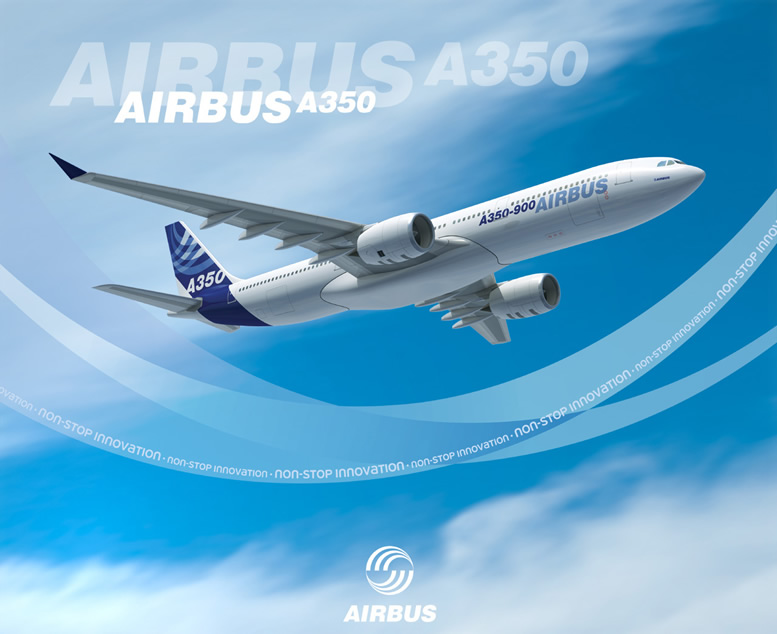
The Airbus A350 is a long-range, mid-sized, widebody family of airliners currently under development, designed to compete with the Boeing 777 and Boeing 787. It will also compete with Airbus' own A330 and A340, since plans to discontinue those models have not been announced. Development Early designs
The airlines pushed Airbus to provide a competitor, as Boeing had committed the 787 to have 20% lower fuel consumption than today's equivalent types. Initially Airbus proposed a simple derivative of the A330, unofficially dubbed the 'A330-200Lite', with improved aerodynamics and engines similar to those on the 787. The airlines were not satisfied and Airbus committed €4 billion to a new design to be called the A350. The original version of the A350 superficially resembled the A330 due to its common fuselage cross-section and assembly. A new wing, engines and a horizontal stabilizer were to be coupled with new composite materials and production methods applied to the fuselage to make the A350 an almost all-new aircraft.
On 16 September 2004, then Airbus president and CEO Noël Forgeard confirmed that a new project was under consideration, but did not give a project name, and would not state whether it would be an entirely new design or a modification of an existing product. Forgeard indicated that Airbus would finalise its concept by the end of 2004, begin consulting with airlines in early 2005, and aim to launch the new development programme at the end of that year. On 10 December 2004 the boards of EADS and BAE Systems, then the shareholders of Airbus, gave Airbus an "authorisation to offer (ATO)", and formally named it the A350.
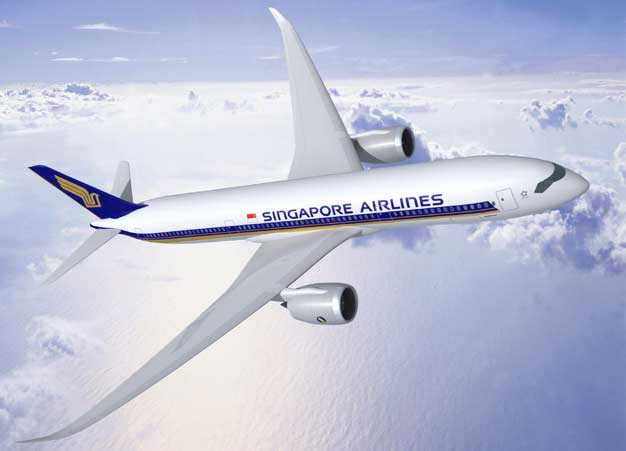
A COMPUTERIZED DRAWING OF THE AIRBUS A350 XWB WITH SINGAPORE AIRLINES LIVERY
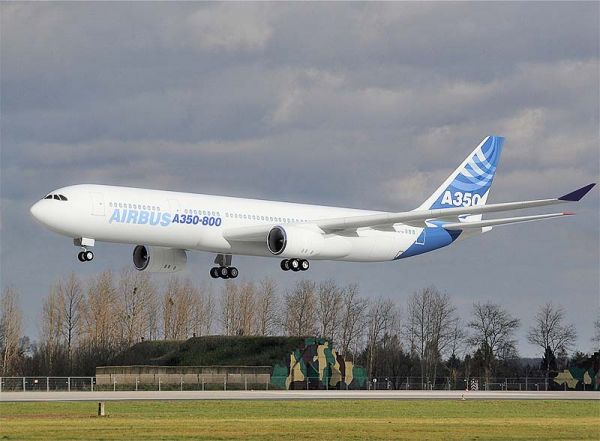
On 6 October 2005 full industrial launch of the program was announced with an estimated development cost of around € 3.5 billion. This version of the A350 was planned to be a 250–300-seat twin-engined wide-body aircraft derived from the design of the existing A330. Under this plan, the A350 would have modified wings and new engines while sharing the same fuselage cross-section as its predecessor. Controversially, the fuselage was to consist primarily of Al-Li, rather than the CFRP fuselage on the 787. It was to see entry into service in 2010 in two versions; the A350-800 capable of flying 8,800 nautical miles (16,300 km) with typical passenger capacity of 253 in 3-class configuration and the 300-seat (3-class) A350-900 with 7,500 nautical mile (13,890 km) range. It was designed to be a direct competitor to the 787-9, and 777-200ER. Almost immediately Airbus faced criticism on the A350 project by the heads of two of its largest customers, ILFC and GECAS. On 28 March 2006, in the presence of hundreds of top airline executives, Steven F. Udvar-Hazy, of ILFC lambasted Airbus' strategy in bringing to market what they saw as "a Band-aid reaction to the 787," a sentiment which was echoed by GECAS president Henry Hubschman. Udvar-Hazy called on Airbus to bring a clean-sheet design to the table, or risk losing most of the market to Boeing.
Several days later, similar comments were made by Chew Choon Seng, CEO of Singapore Airlines. Chew stated, "having gone to the trouble of designing a new wing, tail, cockpit" and adding advanced new materials, Airbus "should have gone the whole hog and designed a new fuselage." At the time, Singapore was reviewing bids for the 787 and A350. Airbus responded by stating it was considering improvements for the A350 to satisfy customer demands. At the same time, Airbus then-CEO Gustav Humbert suggested that there would be no quick fixes, stating, "Our strategy isn't driven by the needs of the next one or two campaigns, but rather by a long-term view of the market and our ability to deliver on our promises." On 14 June 2006, Singapore Airlines announced it had selected the 787 over the A350, ordering 20 787-9s. Emirates decided against making an order for the initial version of the A350 because of weaknesses in the design.
XWB There was some speculation that the revised aircraft would be called the Airbus A370 or A280, with Airbus going as far as accidentally publishing an advert referring to the aircraft as the "A280" on the Financial Times website. However, on 17 July 2006, at the Farnborough Air Show, Airbus announced that the redesigned aircraft would be called A350 XWB (Xtra Wide-Body).
Airbus achieved its first sale of the redesigned A350 four days after its unveiling when Singapore Airlines announced an order for 20 A350 XWBs with options of a further 20. Its CEO, Chew Choon Seng, said in a statement, that "it is heartening that Airbus has listened to customer airlines and has come up with a totally new design for the A350." Late in 2006 a decision on formal launch was delayed as a result of delays of the Airbus A380 and wrangles about how the development would be funded. EADS CEO Thomas Enders stated that the A350 program was not a certainty, citing EADS/Airbus' stretched resources. On 1 December 2006 the EADS board agreed the industrial launch of the sixth iteration A350 with costs mainly borne out of cash-flow. First delivery for the -900 is scheduled for mid-2013, with the -800 and -1000 following on, respectively, 12 and 24 months later. At a press conference 4 December 2006 a few new technical details of the A350 XWB design were revealed, but no new customers were identified and John Leahy indicated existing A350 contracts were under re-negotiation due to increases in prices compared to the original A350s contracted.
On 4 January 2007, Airbus announced that Pegasus Aviation Finance Company had placed the first firm order for the A350 XWB with an order for two aircraft, though the variants were unspecified at the time. The Airbus board of directors approved the industrial launch of the A350-800, -900 and -1000 in December 2006. The XWB will impose a couple of years of delay into the original timetable and almost double development costs from $5.3 billion to approximately $10 billion. During 2007 Paris Air Show, Airbus won firm orders for 141 A350 XWB and at the Dubai Airshow it won firm orders for 165 A350 XWB. Design Airbus claim that the new design comprise a better cabin atmosphere with 20% of humidity level, pressurization at 6,000 ft (1,800 m) and flow management system that adapts cabin airflow to passenger load with draft-free air circulation.
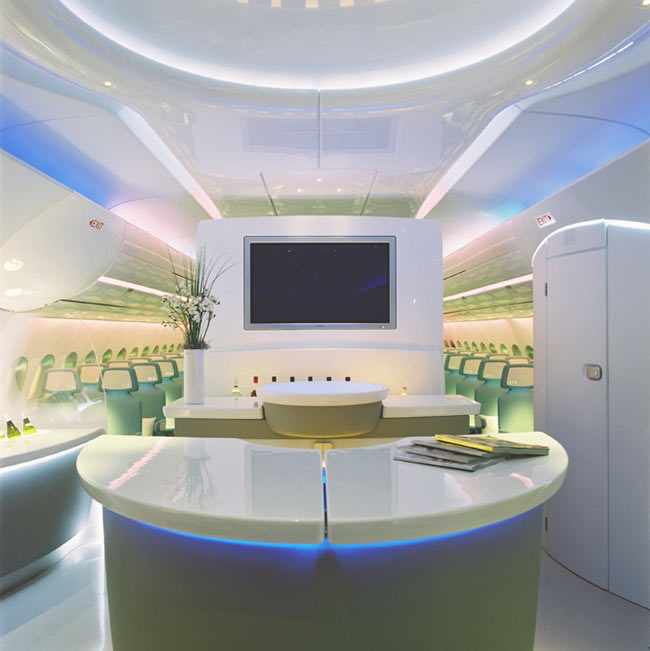
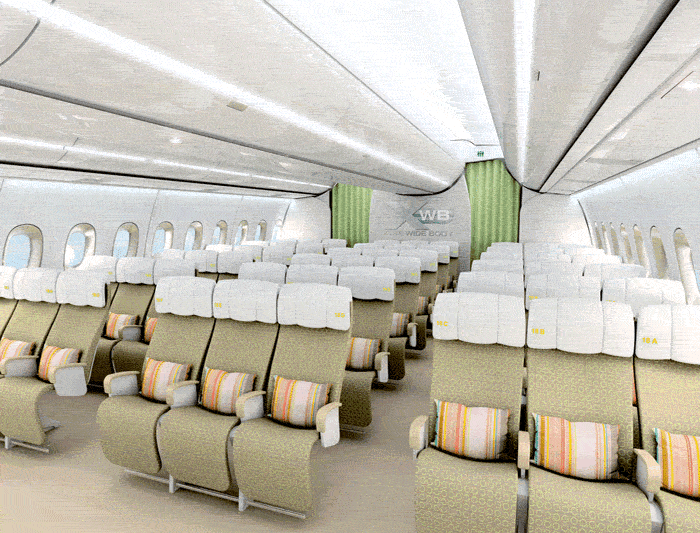
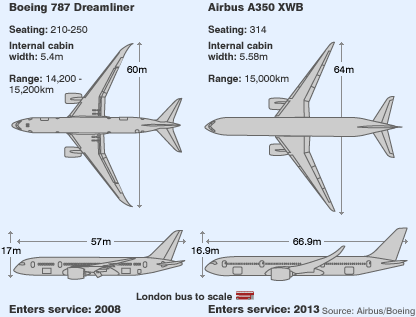
Fuselage In the eight abreast two-four-two arrangement, which is a premium economy layout, the seats will be 19.5 in (49.5 cm) wide between 2-in wide arm rests. Airbus claims that the seat width will be 0.5 in greater than the seat on the 787 in the equivalent configuration. In the nine abreast, three-three-three economy layout, the XWB's seat width will be 17.7 in which will be 0.5 in wider to the proposed equivalent seat layout for the Boeing 787. Airbus confirmed in early September 2007 the adoption of composite fuselage frames for the aircraft structure. The composite frames will feature aluminium strips to ensure the electrical continuity of the fuselage (for dissipating lightning strikes). However, the fuselage crossbeams remain metallic, but Airbus is running trade-off studies to evaluate the switching them to composite. The new design differs slightly from the 787 design which uses ovoid skin barrels on titanium ribs. Airbus had signed a firm contract with BMW to have them develop an interior concept for the original A350.
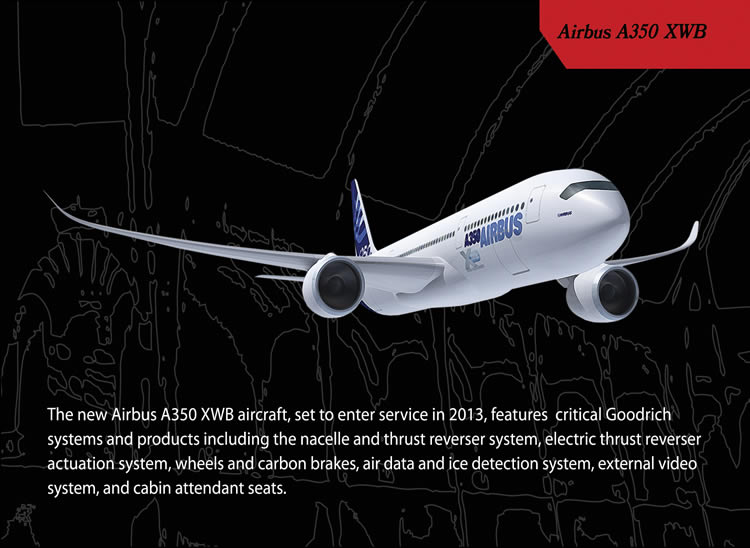
Airbus A350 XWB
Wings Airbus is currently working on the detail of the wings' aerodynamics and it will not freeze the final configuration until the October 2008 design freeze milestone. A new trailing-edge high-lift system has been adopted with an advanced dropped hinge flap (similar to that of the A380) which permits the gap between the trailing edge and the flap to be closed with the spoiler. The manufacturer has carried out 1800 hours of low-speed windtunnel testing and results have led to a slight reduction of the static engine's thrust due to a better low-speed performance than anticipated. High-speed performance testing has begun at the European Transonic Windtunnel in Cologne, Germany and a final decision regarding winglet configuration is expected soon. Airbus is planning a £570 million (US$760 million) investment to upgrade composite capability at its Broughton site in the United Kingdom, in preparation for its role as final assembly location for the A350 XWB wing.
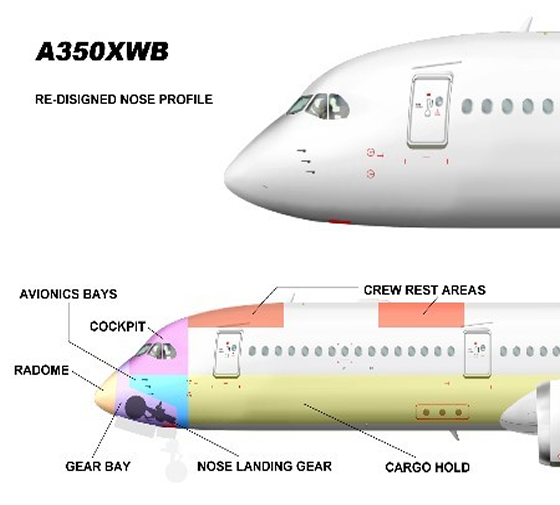
Nose The nose is likely to be constructed from aluminium but Airbus is currently running trade-off studies considering one-piece carbon fiber structure. According to Gordon McConnell, A350 Chief Engineer, a carbon fiber structure will need titanium reinforcements for birdstrike, thus the aluminium structure is the best cost wise. Cockpit The avionics will be a further development of the integrated modular avionics (IMA) concept found on the A380. The A350's IMA will manage up to 40 functions (versus 23 functions for the A380) such as landing gear, fuel, brakes, pneumatics, oxygen system, full cabin pressurisation system and fire detection[36]. Airbus claims benefits such as reduced maintenance and less weight because IMA replace multiple processors and LRUs with around 50% fewer standard computer modules known as line replaceable modules. The IMA runs on a 100 Mbit/s network based on the avionics full-duplex (AFDX) standard, already employed in the A380 instead of the Arinc 429 system on the A330/A340. Contract for the avionics suite is expected to be awarded soon.
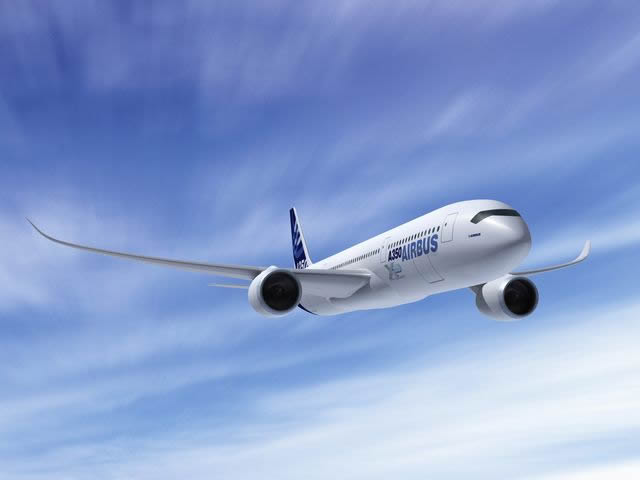
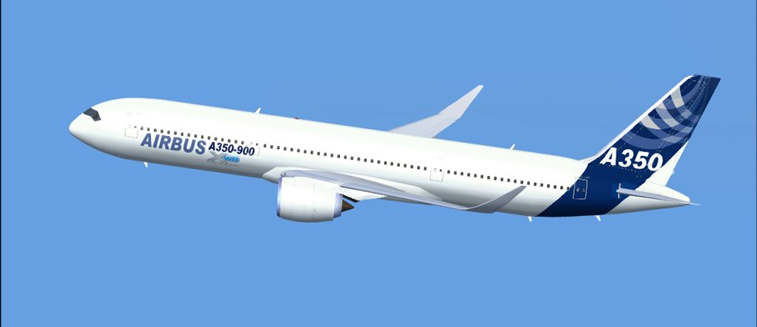
AIRBUS A350-900 XWB (EXTENDED WIDE BODY)
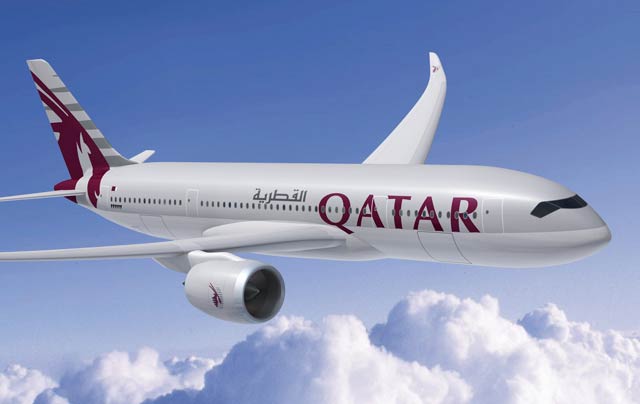
Engines GE has stated it will not offer the GP7000 on the aircraft, and that previous contracts for the GEnx on the original A350 did not apply to the XWB. In April 2007, Airbus former chief executive Louis Gallois held face-to-face talks with senior General Electric management over finalizing the possible go-ahead of a new variant of the GEnx engine for the A350 XWB. Airline pressure for a GE engine option is believed to be coming particularly from US Airways and Singapore Airlines, as well as others within the A350 orders group that either originally selected GE or that have not yet settled for the Rolls-Royce Trent XWB-powered option. But on June 2007, Rolls-Royce announced that it had signed its biggest ever contract with Qatar Airways for the Trent XWB to power 80 A350 XWBs on order from Airbus worth $5.6 billion at list prices and in June 2007, Airbus' Chief Operating Officer John Leahy indicated that the GEnx engine will not feature on the A350 XWB, claiming that Airbus wants GE to offer a more efficient version for the new Airbus airliner. Both Singapore Airlines and US Airways have selected the RR Trent XWB for their future fleet of A350.
The Trent XWB will feature a 118 in (3 m) fan diameter and the design will be based on the advanced developments of the Trent 900 (Airbus A380) and Trent 1000 (Boeing 787). The Trent XWB may also benefit from the next-generation reduced acoustic mode scattering engine duct system (RAMSES), which is a noise-dampening engine nacelle intake and a carry on design of the Airbus's "zero splice" intake liner developed for the A380. Auxiliary power unit Landing gear
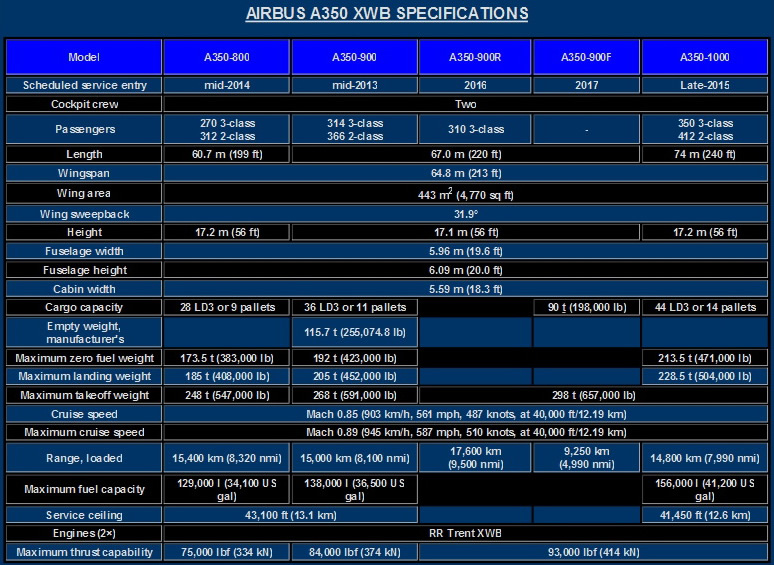
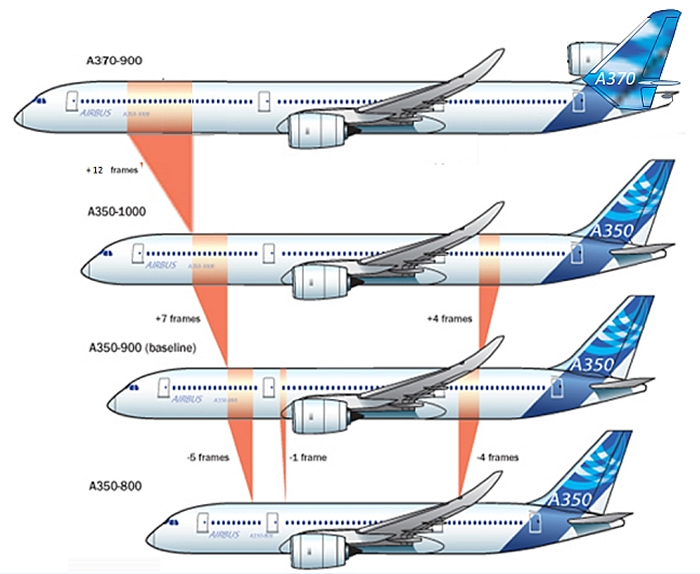
Airbus devised a three-pronged main landing gear design philosophy encompassing both four- and six-wheel bogies to ensure it can keep the pavement loading within limits. The A350-800 and A350-900 will both have four-wheel bogies, although the -800's will be slightly shorter to save weight. Both will fit in the same 4.1 m (13.5 ft) long bay. The proposed higher weight variant, the A350-1000 (and the proposed A350-900R and A350-900F) will used a six-wheel bogey and a 4.7 m landing gear bay. Messier-Dowty was chosen to provide the original A350's main landing gear, and has been confirmed to be providing the main landing gear for the new XWB. The nose gear will be supplied by Liebherr-Aerospace. Variants A350-800 A350-900 A350-1000 AIRBUS A350 XWB SPECIFICATIONS
|
||||||||||||||||||||||||||||||||||||||||||||||||||||||||||||||||||||||||||||||||||||||||||||||||||||||||||||||||||||||||||||||||||||||||||||||||||||||||||



© AviationExplorer.com - The Website For Aviation Enthusiasts |