USAF NORTHROP B-2 (B2) SPIRIT STEALTH BOMBER (FLYING WING) JET INFORMATION, HISTORY, PICTURES AND FACTS

THE BELOW LINKS CONTAIN DETAILED AIRLINE, MILITARY JETS, TEST AIRCRAFT, AIRPLANE FACT SHEETS AND AEROSPACE INFORMATION  THE BELOW LINKS CONTAIN AVIATION, MILITARY, AIRCRAFT VIDEOS, PICTURES, FACTS, INFORMATION, AUDIO, HISTORY, MOVIES AND PHOTOS  THE BELOW LINKS CONTAIN FLIGHT TRACKING, AIRPORT INFO, AVIATION PIONEERS, USAF REFERENCES, NTSB FACTS AND AVIATION WEATHER THE BELOW LINKS CONTAIN INFORMATION ON AIRLINES IN CURRENT SERVICE TODAY AND ALSO BANKRUPT US AIRLINE COMPANIES (DEFUNCT)
|



USAF NORTHROP B-2 (B2) SPIRIT STEALTH BOMBER JET
INFORMATION, HISTORY, PICTURES AND FACTS
 |
 |
The B-2 Bomber was designed almost entirely by computers.A radical departure from traditional methods at the time. Engineers could design the models right down to a screw, and test out the crafts stealth.
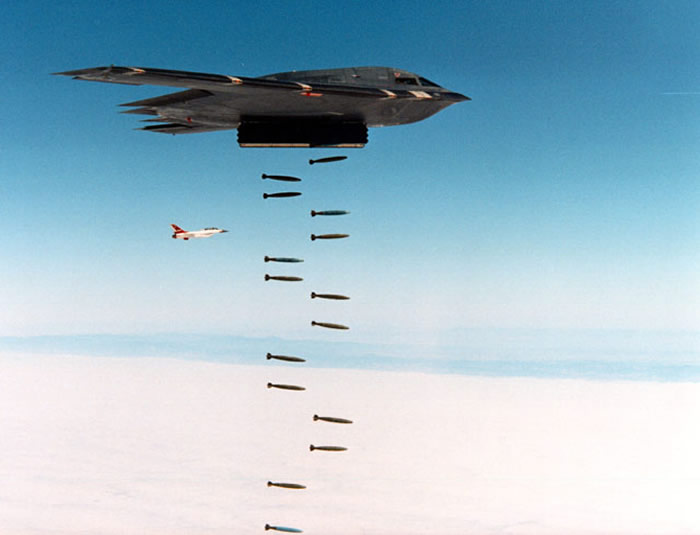
The manufacturing process was also done with computers and robots. This was crucial to prevent errors because they could compromise the planes stealth. At the beginning of the project the Air Force planned to buy 132 B-2s. Costing the US about $22 billion. When the aircraft was unveiled in 1988, the price was $70 billion. Congress was not pleased, especially since the B-2 cost $20 billion to develop. With the collapse of the Soviet Union the prices increased and the value of the planes decreased. Many feel that plane isn't worth its price. Especially since the cheaper B-52 can carry more bombs at a faster speed. There are no plans at this time to increase the size of the fleet.
The B-2 has an advanced two-man cockpit with provisions for a third crew member/observer. Extreme technology has done away with the flight engineer and bombardier of earlier bombers. The Hughes AN/APQ-181 attack radar has conformal phased array transmitters buried in the fuselage, doing away with the need for a dish aerial and its associated bulbous dome.
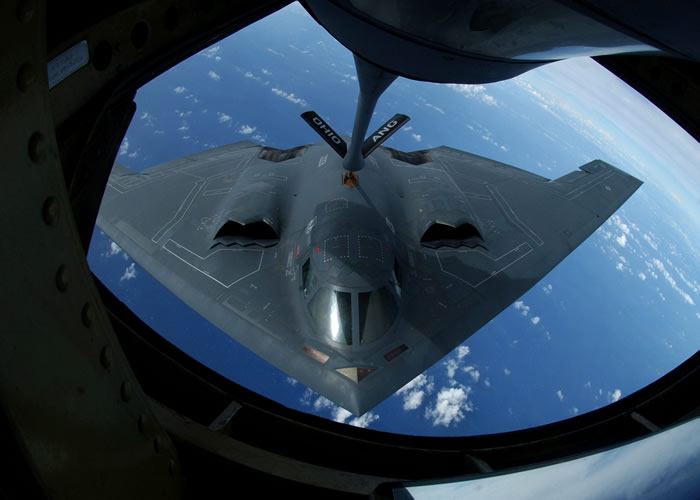
Extensive use is made of graphite/epoxy materials in the aircraft's structure. These are not good reflectors of radar energy and contribute to the bomber's stealthiness. The B-2s undercarriage has been adapted from a design that was used on the Boeing 757 and 767. Vapor trails are the enemy of any aircraft claiming to be stealthy. Chloro-fluorosulphonic acid is injected into the exhaust gases of the B-2 to inhibit the formation of contrails at high altitude.
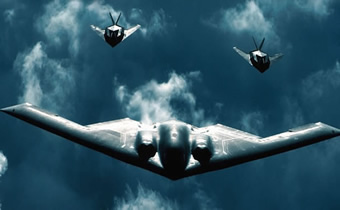
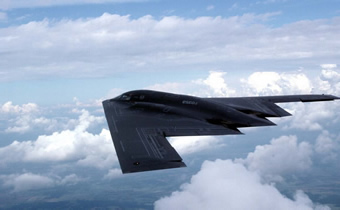
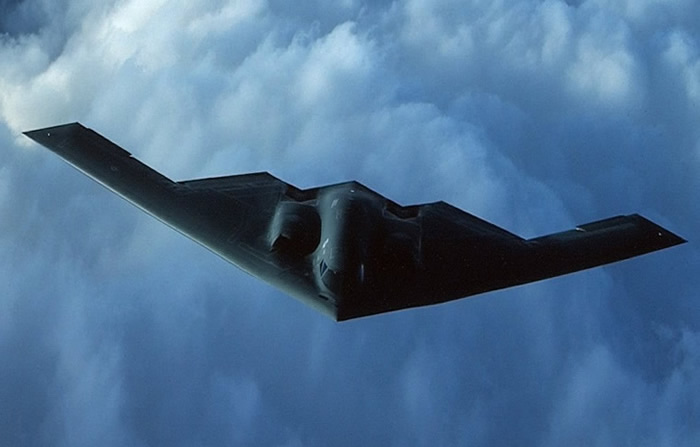
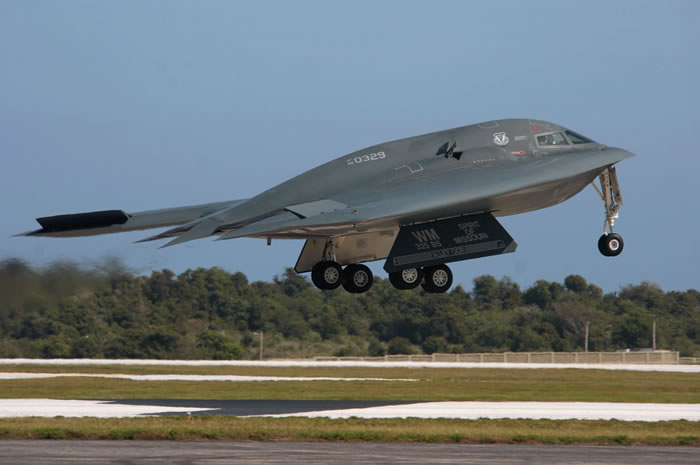
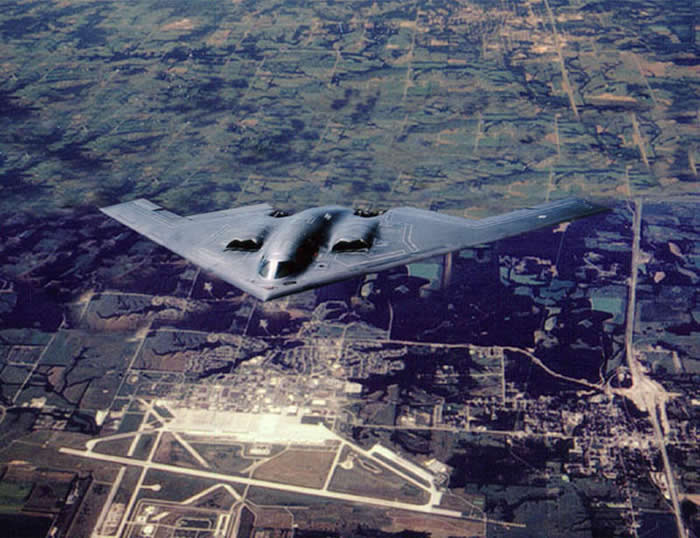
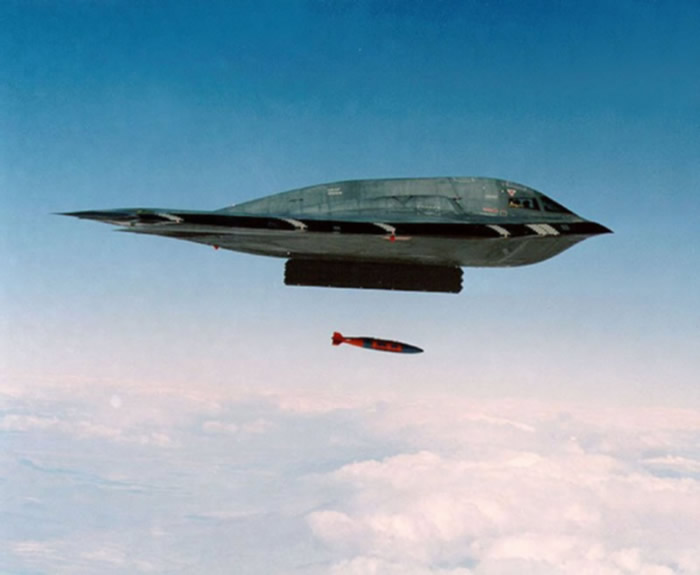
The 33° sweep of the leading edge and the W configuration of the trailing edge are designed to deflect and trap the radar energy coming from a hostile transmitter. The engines exhaust through V-shaped outlets set back and above the trailing edges to hide these heat sources from detection on the ground. When the B-2 was first shown, photos were only allowed from certain angles to hide the aircraft's stealthy features. Wind tunnel models of the B-2 were tested for a record 24,000 hours before the aircraft ever flew. The radar-absorbing body of the B-2 contains 900 materials and a million parts. Two B-2s can complete a bombing raid which previously required 32 F-16s, 16 F-15s, and 27 support aircraft. The B-2 requires input from 136 onboard computers to fly and accomplish its mission.
Mission
The revolutionary blending of low-observable technologies with high aerodynamic efficiency and large payload gives the B-2 important advantages over existing bombers. Its low-observability provides it greater freedom of action at high altitudes, thus increasing its range and a better field of view for the aircraft's sensors. Its unrefueled range is approximately 6,000 nautical miles (9,600 kilometers). Whiteman AFB, Mo., is the only operational base for the B-2. The first aircraft, Spirit of Missouri, was delivered Dec. 17, 1993. Depot maintenance responsibility for the B-2 is performed by Air Force contractor support and is managed at the Oklahoma City Air Logistics Center at Tinker AFB, Okla. General Characteristics |
© AviationExplorer.com - The Website For Aviation Enthusiasts |


