THE BELOW LINKS CONTAIN DETAILED AIRLINE, MILITARY JETS, TEST AIRCRAFT & AEROSPACE FACT SHEETS AND A/C INFORMATION

THE BELOW LINKS CONTAIN AVIATION & MILITARY RELATED WEBPAGES, PICTURES, FACTS, INFORMATION, HISTORY, MOVIES AND MORE

THE BELOW LINKS CONTAIN INFORMATION ON AIRLINES IN CURRENT SERVICE AND BANKRUPT AIRLINE COMPANIES (DEFUNCT)


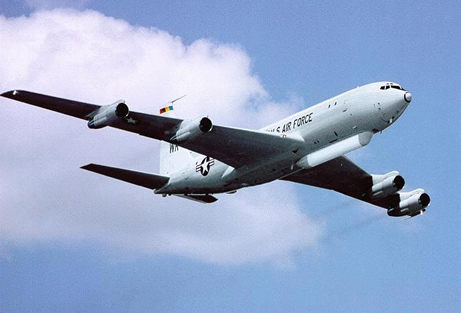
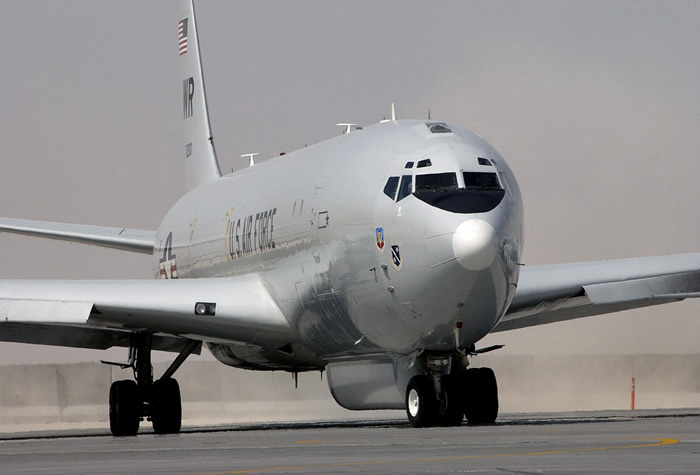
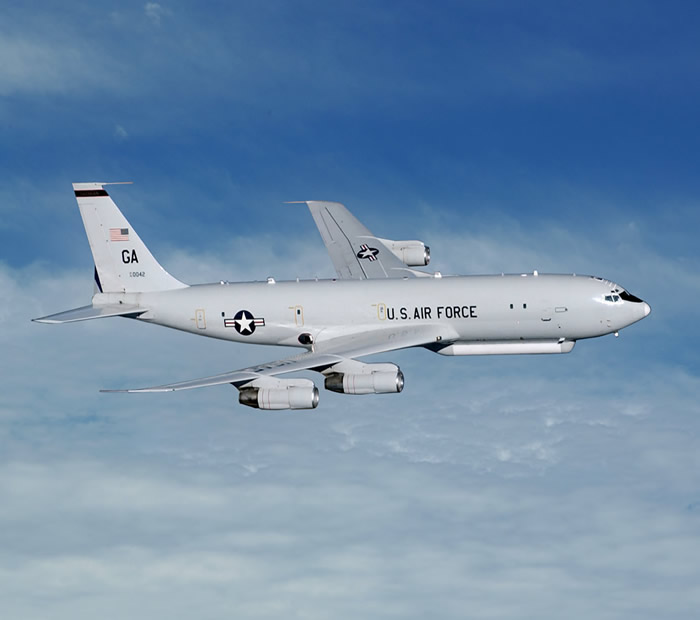
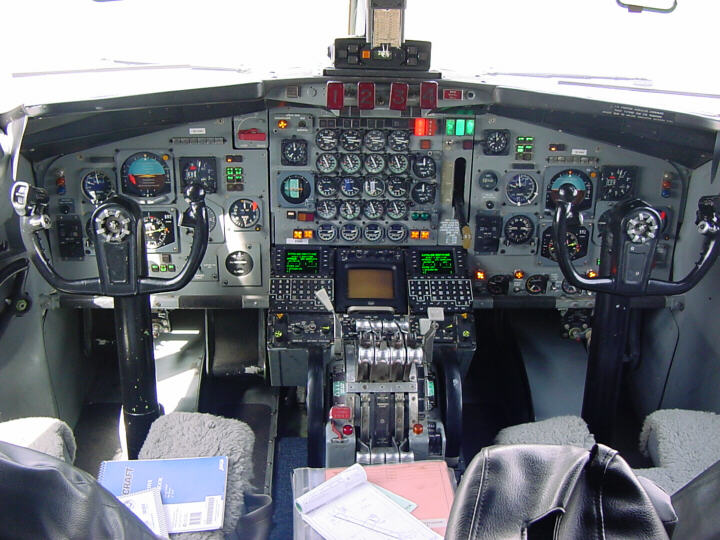
AIR FORCE E-8C JOINT STARS AIRCRAFT (JOINT SURVEILLANCE TARGET ATTACK RADAR SYSTEM) HISTORY & FACTS

BROWSE HUNDREDS OF DISCOUNT AIR FORCE COLLECTIBLES

E8 JOINT STARS


Mission
The E-8C Joint Surveillance Target Attack Radar System (Joint STARS) is an airborne battle management, command and control, intelligence, surveillance and reconnaissance platform. Its primary mission is to provide theater ground and air commanders with ground surveillance to support attack operations and targeting that contributes to the delay, disruption and destruction of enemy forces.

Features
The E-8C is a modified Boeing 707-300 series commercial airframe extensively remanufactured and modified with the radar, communications, operations and control subsystems required to perform its operational mission. The most prominent external feature is the 40-foot (12 meters) long, canoe-shaped radome under the forward fuselage that houses the 24-foot (7.3 meters) long, side-looking phased array antenna.

The radar and computer subsystems on the E-8C can gather and display detailed battlefield information on ground forces. The information is relayed in near-real time to the Armyxs common ground stations and to other ground command, control, communications, computers and intelligence (C4I) nodes.

The antenna can be tilted to either side of the aircraft where it can develop a 120-degree field of view covering nearly 19,305 square miles (50,000 square kilometers) and is capable of detecting targets at more than 250 kilometers (more than 820,000 feet). The radar also has some limited capability to detect helicopters, rotating antennas and low, slow-moving fixed wing aircraft.

As a battle management and command and control asset, the E-8C can support the full spectrum of roles and missions from peacekeeping operations to major theater war.

Background
Joint STARS evolved from Army and Air Force programs to develop, detect, locate and attack enemy armor at ranges beyond the forward area of troops. The first two developmental aircraft deployed in 1991 to Operation Desert Storm and also supported Operation Joint Endeavor in December 1995.

Joint STARS supported NATO troops over Bosnia-Herzegovina in 1996, Operation Allied Force from February to June 1999, and Operation Enduring Freedom and Operation Iraqi Freedom in 2003.

The 116th Air Control Wing is America's first "Total Force" wing. The former 93rd Air Control Wing, an active-duty Air Combat Command unit, and 116th Bomb Wing, a Georgia Air National Guard unit, were deactivated Oct.1, 2002. The 116th Air Control Wing was activated blending Guard and active-duty airmen into a single unit.

The 116th ACW is the only unit that operates the E-8C and the Joint STARS mission. There are 15 aircraft in the inventory with two more scheduled to arrive by early 2005.

General Characteristics
Primary Function: Airborne battle management
Primary Contractor: Northrop Grumman Corp.
Power Plant: Four Pratt and Whitney TF33-102C
Thrust: 19,200 pounds each engine
Length: 152 feet, 11 inches (46.6 meters)
Height: 42 feet 6 inches (13 meters)
Wingspan: 145 feet, 9 inches (44.4 meters
Speed: Optimum orbit speed 390 - 510 knots (Mach 0.52 - 0.65)
Ceiling: 42,000 feet (12,802 meters)
Maximum Takeoff Weight: 336,000 pounds (152,409 kilograms)
Range: 9 hours (unrefueled)
Unit Cost: $244.4 million (fiscal 98 constant dollars)
Crew: Flight crew of four plus 15 Air Force and three Army specialists (crew size varies according to mission)
Date Deployed: 1996
Inventory: Total Force wing, 15; Reserve, 0


Pilot Watches and Aviation Watches: You're in Command


Military watches are dependable watches. Many come with end-of-battery-life warnings, so you know your watch won't suddenly fail you when you might need your watch the most. Have you ever had a watch break easily? The military knows how rough life can be on a watch, and many military watches have additional features to protect the watch and to enhance the durability of the watch, like unidirectional ratcheting bezels, crown protectors, scratch-resistant crystals, screw down case backs, and safety clasps on the bracelets and bands of the watch.


Even a single second can be crucially important in aviation; a pilot has no room for error when it comes to time, and that's why pilots use the best of aviation watches. In today's fast-paced world, watches of extreme accuracy and quality are needed in many fields. Pilot watches and aviation watches often come loaded with gizmos like tachymeters, unit conversion slide rules, chronographs (some with hands measuring down to a tenth of a second!), and other features critical to pilot watches, like anti-reflective crystals and non-radioactive luminescence.


Citizen Skyhawk Aviation Watch
Citizen Nighthawk Pilot Watch
Citizen Chronograph Flight Watch
Seiko Chronograph A6B Fighter Pilots Watch
Hamilton Chronograph Aviation Watch
Pulsar Tech Alarm Chronograph Aviators Watch
Torgoen Computer Flight Watch
Citizen Aqualand 200M Divers Watch

© AviationExplorer.com - The Website For Aviation Enthusiasts

top aviation


top 100 aviation sites online


AVIATION TOP 100 - www.avitop.com Avitop.com

flight sim sites


AvCanada Topsites List

Military Aircraft Collection Top 100

TOP 100 AVIATION SITES


Best Aviation Sites

the Civil Aviation pit-stop! - BEST AVIATION SITES - by Max Cometa

F22Fighter.com Topsites List