WHAT CAUSES AIRCRAFT TURBULENCE - VORTEX EFFECTS - GUIDELINES TO STAYING SAFE FLYING IN TURBULENCE

THE BELOW LINKS CONTAIN DETAILED AIRLINE, MILITARY JETS, TEST AIRCRAFT, AIRPLANE FACT SHEETS AND AEROSPACE INFORMATION  THE BELOW LINKS CONTAIN AVIATION, MILITARY, AIRCRAFT VIDEOS, PICTURES, FACTS, INFORMATION, AUDIO, HISTORY, MOVIES AND PHOTOS  THE BELOW LINKS CONTAIN FLIGHT TRACKING, AIRPORT INFO, AVIATION PIONEERS, USAF REFERENCES, NTSB FACTS AND AVIATION WEATHER THE BELOW LINKS CONTAIN INFORMATION ON AIRLINES IN CURRENT SERVICE TODAY AND ALSO BANKRUPT US AIRLINE COMPANIES (DEFUNCT)
|



WHAT CAUSES AIRCRAFT TURBULENCE AND VORTEX EFFECTS
GUIDELINES TO STAYING SAFE WHILE FLYING IN TURBULENCE
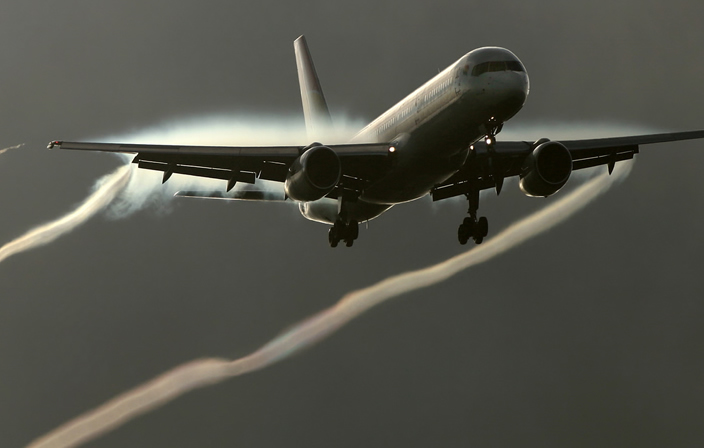 |
Turbulence is air movement that normally cannot be seen and often occurs unexpectedly.It can be created by many different conditions, including atmospheric pressure, jet streams, air around mountains, cold or warm weather fronts or thunderstorms. Turbulence can even occur when the sky appears to be clear. While turbulence is normal and happens often, it can be dangerous. Its bumpy ride can cause passengers who are not wearing their seat belts to be thrown from their seats without warning. But, by following the guidelines suggested on this site, you can help keep yourself and your loved ones safe when traveling by air. |
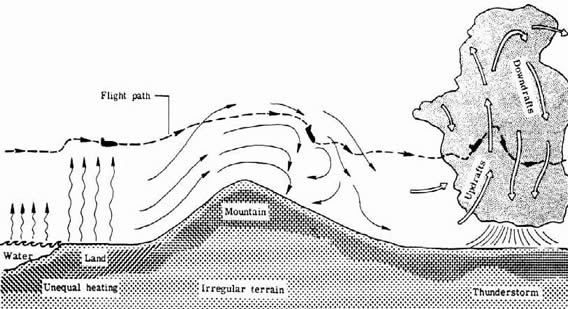 |
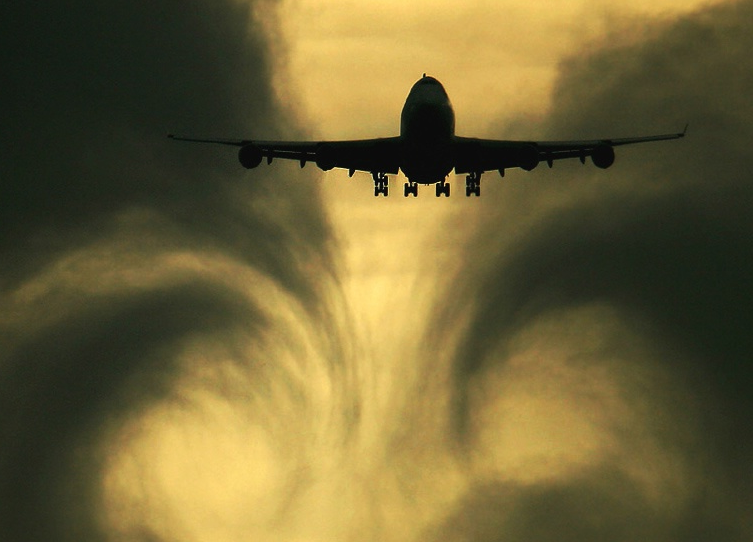
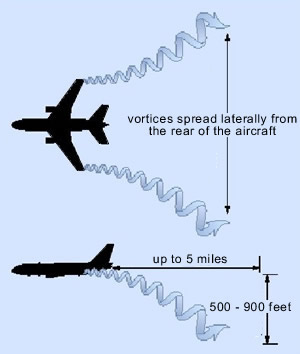
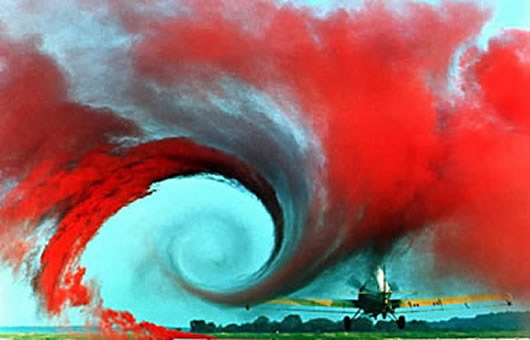
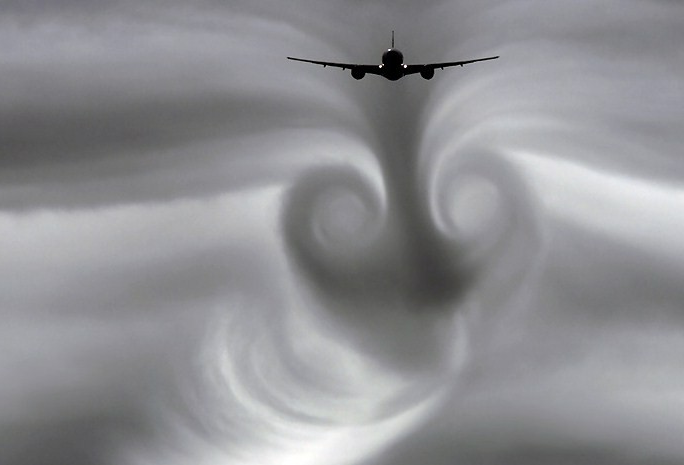
The way an aeroplane's wing works makes air flow faster over the top than the bottom. This results in a rotational flow at the wingtips generating a vortex which trails the plane. Due to the conservation of rotation in the overall system, this trailing vortex exactly balances the flow around the wing, meaning if another plane were to try to fly in it, the lift effect of it's own wings would be exactly cancelled out and it would drop like a stone.
This is a particularly serious consideration for things like fighter squadrons where you want a lot of planes taking off in quick succession. That's just talking about nice ideal predictable systems. When you introduce turbulence and weather systems you can get all sorts of freak effects. Another thing that causes sudden crashes is when a thunderstorm's updraft is near the airport. Air on one side of the updraft could give the plane a headwind, and air on the other side would be a tailwind. If a plane crosses at slow landing speeds, then suddenly they could have an airspeed too slow to keep them flying. In the past when planes have mysteriously wrecked near airports, I've heard of this being the guessed-at cause. One plane following another in just the wrong place. It's interesting to see a more visual example of what those air currents are really doing. Wake turbulance is caused because there is a pressure difference between the top of the wing (low pressure) and the botttom of the wing (high pressure). The pressure tries to equalize by flowing around the wingtip. You might notice that some planes have little fins at the tips of the wings (WINGLETS). These are there to provide a barrier to that pressure difference. This air flow around the wing tip wastes a lot of energy, so by having these wingtips they can save fuel. When small planes land behind large planes at airports, they must first wait several minutes for the wake turbulence to clear. A 747 can tumble a Cessna 172 around like it is on spin cycle, even if the 747 is a minute in front of the Cessna. |
 |
GUIDELINES ON HOW TO STAY SAFE WHEN FLYINGTo keep as safe as possible during flight, FAA regulations require passengers to be seated with their seat belts fastened:
Why is it important to follow these safety regulations? Consider this:
Source: faa.gov |
 |
 |
 |
© AviationExplorer.com - The Website For Aviation Enthusiasts |


