THE BELOW LINKS CONTAIN DETAILED AIRLINE, MILITARY JETS, TEST AIRCRAFT & AEROSPACE FACT SHEETS AND A/C INFORMATION

THE BELOW LINKS CONTAIN AVIATION & MILITARY RELATED WEBPAGES, PICTURES, FACTS, INFORMATION, HISTORY, MOVIES AND MORE

THE BELOW LINKS CONTAIN INFORMATION ON AIRLINES IN CURRENT SERVICE AND BANKRUPT AIRLINE COMPANIES (DEFUNCT)


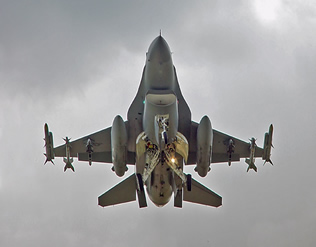
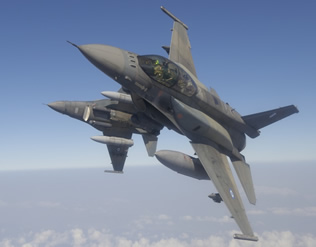
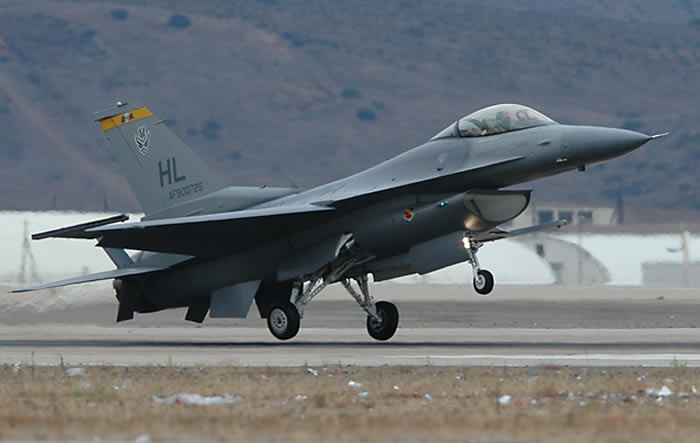
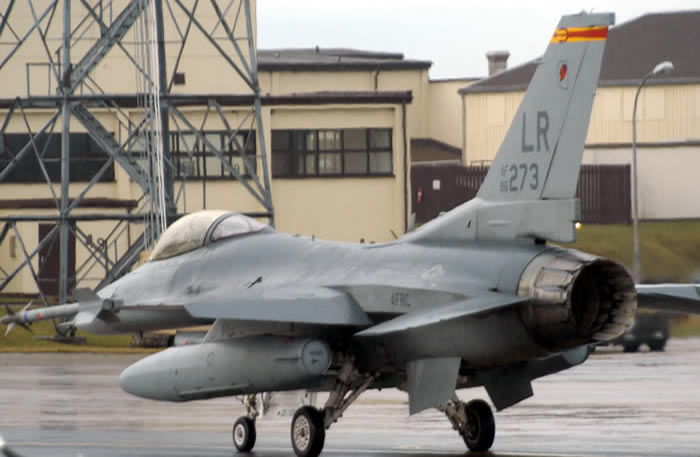
LOCKHEED MARTIN F-16 FIGHTING FALCON PICTURES HISTORY AND FACTS

BROWSE HUNDREDS OF DISCOUNT AIR FORCE COLLECTIBLES

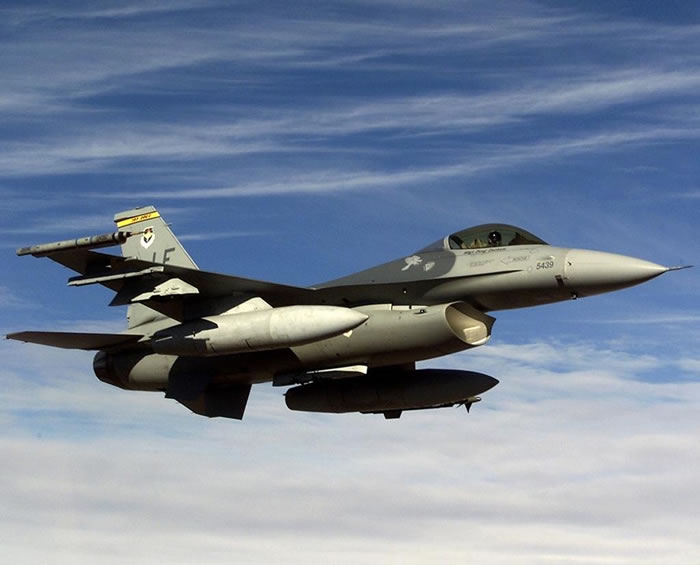
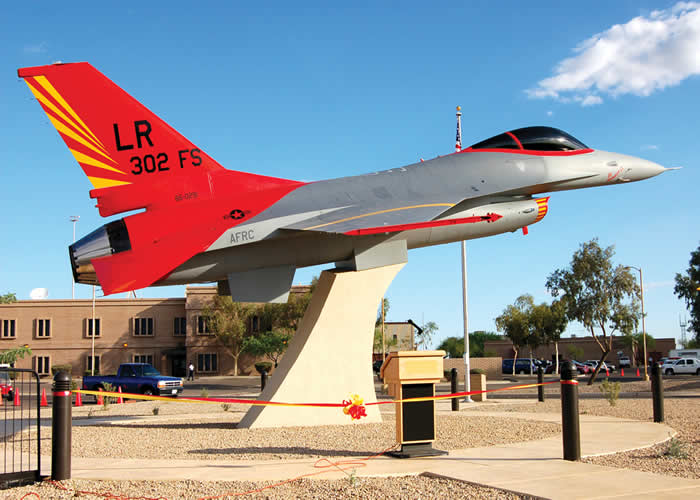
lockheed f16
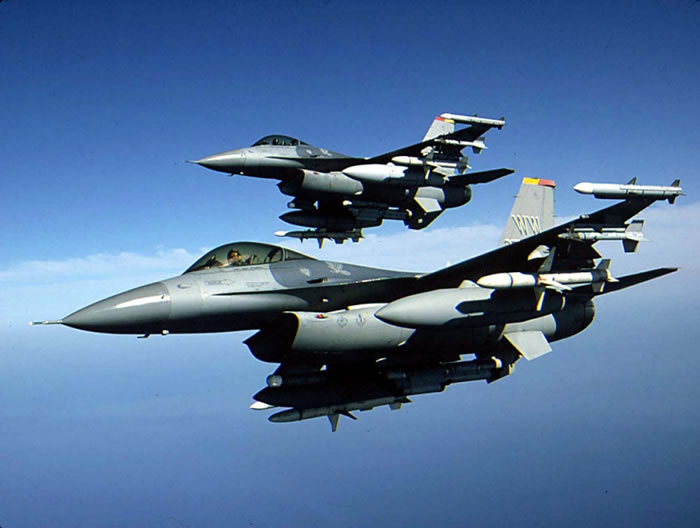
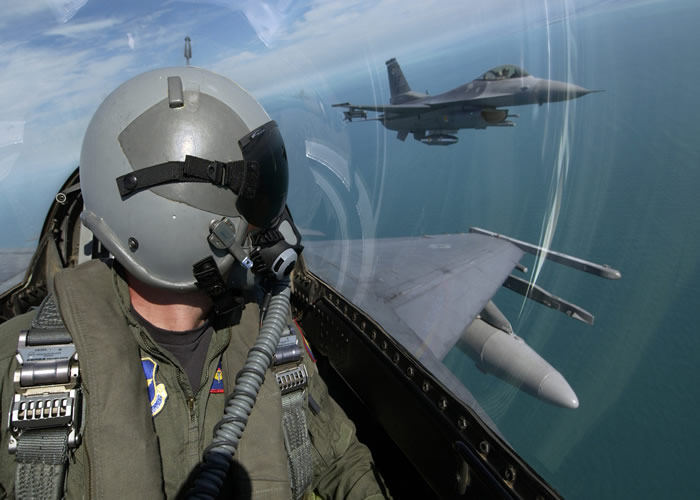
f-16s flying in formation


Mission
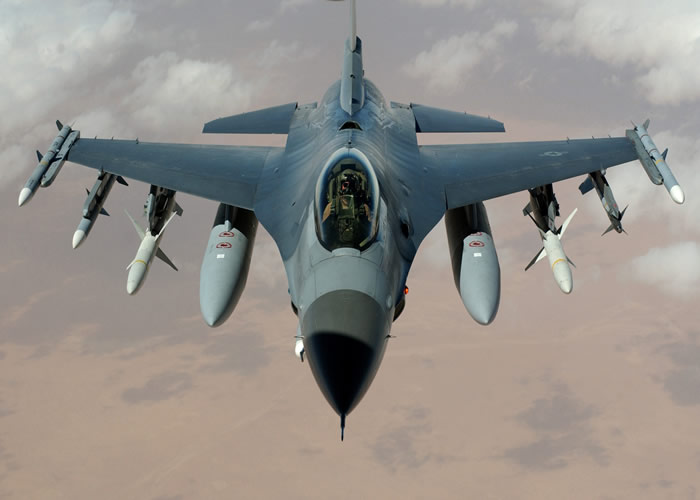
The F-16 Fighting Falcon is a compact, multi-role fighter aircraft. It is highly maneuverable and has proven itself in air-to-air combat and air-to-surface attack. It provides a relatively low-cost, high-performance weapon system for the United States and allied nations.
Features
In an air combat role, the F-16's maneuverability and combat radius (distance it can fly to enter air combat, stay, fight and return) exceed that of all potential threat fighter aircraft. It can locate targets in all weather conditions and detect low flying aircraft in radar ground clutter. In an air-to-surface role, the F-16 can fly more than 500 miles (860 kilometers), deliver its weapons with superior accuracy, defend itself against enemy aircraft, and return to its starting point. An all-weather capability allows it to accurately deliver ordnance during non-visual bombing conditions.

In designing the F-16, advanced aerospace science and proven reliable systems from other aircraft such as the F-15 and F-111 were selected. These were combined to simplify the airplane and reduce its size, purchase price, maintenance costs and weight. The light weight of the fuselage is achieved without reducing its strength. With a full load of internal fuel, the F-16 can withstand up to nine G's -- nine times the force of gravity -- which exceeds the capability of other current fighter aircraft.

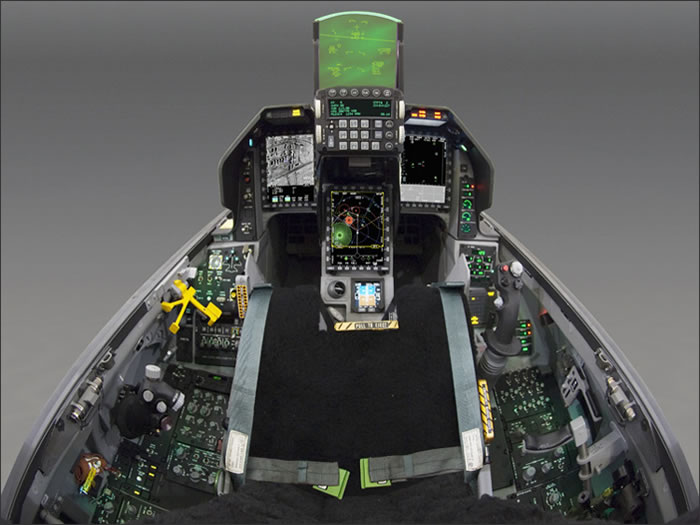
The cockpit and its bubble canopy give the pilot unobstructed forward and upward vision, and greatly improved vision over the side and to the rear. The seat-back angle was expanded from the usual 13 degrees to 30 degrees, increasing pilot comfort and gravity force tolerance. The pilot has excellent flight control of the F-16 through its "fly-by-wire" system. Electrical wires relay commands, replacing the usual cables and linkage controls. For easy and accurate control of the aircraft during high G-force combat maneuvers, a side stick controller is used instead of the conventional center-mounted stick. Hand pressure on the side stick controller sends electrical signals to actuators of flight control surfaces such as ailerons and rudder.

Avionics systems include a highly accurate inertial navigation system in which a computer provides steering information to the pilot. The plane has UHF and VHF radios plus an instrument landing system. It also has a warning system and modular countermeasure pods to be used against airborne or surface electronic threats. The fuselage has space for additional avionics systems.

Background
The F-16A, a single-seat model, first flew in December 1976. The first operational F-16A was delivered in January 1979 to the 388th Tactical Fighter Wing at Hill Air Force Base, Utah.

The F-16B, a two-seat model, has tandem cockpits that are about the same size as the one in the A model. Its bubble canopy extends to cover the second cockpit. To make room for the second cockpit, the forward fuselage fuel tank and avionics growth space were reduced. During training, the forward cockpit is used by a student pilot with an instructor pilot in the rear cockpit.

All F-16s delivered since November 1981 have built-in structural and wiring provisions and systems architecture that permit expansion of the multirole flexibility to perform precision strike, night attack and beyond-visual-range interception missions. This improvement program led to the F-16C and F-16D aircraft, which are the single- and two-place counterparts to the F-16A/B, and incorporate the latest cockpit control and display technology. All active units and many Air National Guard and Air Force Reserve units have converted to the F-16C/D.

The F-16 was built under an unusual agreement creating a consortium between the United States and four NATO countries: Belgium, Denmark, the Netherlands and Norway. These countries jointly produced with the United States an initial 348 F-16s for their air forces. Final airframe assembly lines were located in Belgium and the Netherlands. The consortium's F-16s are assembled from components manufactured in all five countries. Belgium also provides final assembly of the F100 engine used in the European F-16s. Recently, Portugal joined the consortium. The long-term benefits of this program will be technology transfer among the nations producing the F-16, and a common-use aircraft for NATO nations. This program increases the supply and availability of repair parts in Europe and improves the F-16's combat readiness.

USAF F-16 multi-mission fighters were deployed to the Persian Gulf in 1991 in support of Operation Desert Storm, where more sorties were flown than with any other aircraft. These fighters were used to attack airfields, military production facilities, Scud missiles sites and a variety of other targets.

Most recently in the Spring of 1999 during Operation Allied Force, USAF F-16 multi-mission fighters flew a variety of missions to include suppression of enemy air defense, offensive counter air, defensive counter air, close air support and forward air controller missions. Mission results were outstanding as these fighters destroyed radar sites, vehicles, tanks, MiGs and buildings.

General Characteristics
Primary Function: Multirole fighter
Builder: Lockheed Martin Corp.
Power Plant: F-16C/D: one Pratt and Whitney F100-PW-200/220/229 or General Electric F110-GE-100/129
Thrust: F-16C/D, 27,000 pounds
Length: 49 feet, 5 inches (14.8 meters)
Height: 16 feet (4.8 meters)
Wingspan: 32 feet, 8 inches (9.8 meters)
Speed: 1,500 mph (Mach 2 at altitude)
Ceiling: Above 50,000 feet (15 kilometers)
Maximum Takeoff Weight: 37,500 pounds (16,875 kilograms)
Range: More than 2,000 miles ferry range (1,740 nautical miles)
Armament: One M-61A1 20mm multibarrel cannon with 500 rounds; external stations can carry up to six air-to-air missiles, conventional air-to-air and air-to-surface munitions and electronic countermeasure pods
Unit cost: F-16A/B , $14.6 million (fiscal 98 constant dollars) ; F-16C/D, $18.8 million (fiscal 98 constant dollars)
Crew: F-16C, one; F-16D, one or two
Date Deployed: January 1979
Inventory: Active force, F-16C, 590 and F-16D, 130; Reserve, F-16C, 60 and F-16D; 10 and Air National Guard, F-15C, 438 and F-16D, 40.


Pilot Watches and Aviation Watches: You're in Command


Military watches are dependable watches. Many come with end-of-battery-life warnings, so you know your watch won't suddenly fail you when you might need your watch the most. Have you ever had a watch break easily? The military knows how rough life can be on a watch, and many military watches have additional features to protect the watch and to enhance the durability of the watch, like unidirectional ratcheting bezels, crown protectors, scratch-resistant crystals, screw down case backs, and safety clasps on the bracelets and bands of the watch.


Even a single second can be crucially important in aviation; a pilot has no room for error when it comes to time, and that's why pilots use the best of aviation watches. In today's fast-paced world, watches of extreme accuracy and quality are needed in many fields. Pilot watches and aviation watches often come loaded with gizmos like tachymeters, unit conversion slide rules, chronographs (some with hands measuring down to a tenth of a second!), and other features critical to pilot watches, like anti-reflective crystals and non-radioactive luminescence.


Citizen Skyhawk Aviation Watch
Citizen Nighthawk Pilot Watch
Citizen Chronograph Flight Watch
Seiko Chronograph A6B Fighter Pilots Watch
Hamilton Chronograph Aviation Watch
Pulsar Tech Alarm Chronograph Aviators Watch
Torgoen Computer Flight Watch
Citizen Aqualand 200M Divers Watch

© AviationExplorer.com - The Website For Aviation Enthusiasts

top aviation


top 100 aviation sites online


AVIATION TOP 100 - www.avitop.com Avitop.com

flight sim sites


AvCanada Topsites List

Military Aircraft Collection Top 100

TOP 100 AVIATION SITES


Best Aviation Sites

the Civil Aviation pit-stop! - BEST AVIATION SITES - by Max Cometa

F22Fighter.com Topsites List